
Tap to log sessions. Generate reports in one click. No patient name ever leaves your clinic.
Capture the work as it happens, see what changes across your own records, and generate supported reports from the same clinical history. Patient identity stays in your clinic.
Keep preparation, treatment, and integration connected.
Follow-up continues from Integration so later assessments and observations stay tied to the treatment that came before them.
Establish the baseline, clinical context, and planning that need to be available when treatment begins.
- Informed consent
- Risk and safety
- Mental health screening
- Set and setting
Build a structured chronology of the session as dosing, events, vitals, observations, and other recorded information unfold.
- Dose administrations
- Vitals
- Clinical reports
- Adverse events
- Experiential observations
Keep integration sessions, assessments, follow-up planning, and later observations connected to the treatment history.
- Integration sessions
- Follow-up planning
- Ongoing assessments
- Long-term follow-up
Turn the work you've already done into reports with one click.
Session timelines, progress summaries, clinical outcomes, and other supported outputs come from the same structured clinical history. The format changes without separating the output from the treatment context behind it.
- Jun 01 Preparation Baseline and consent
- Jun 08 Treatment Session 1
- Jun 22 Integration Integration session
- Ongoing Follow-up Assessments over time
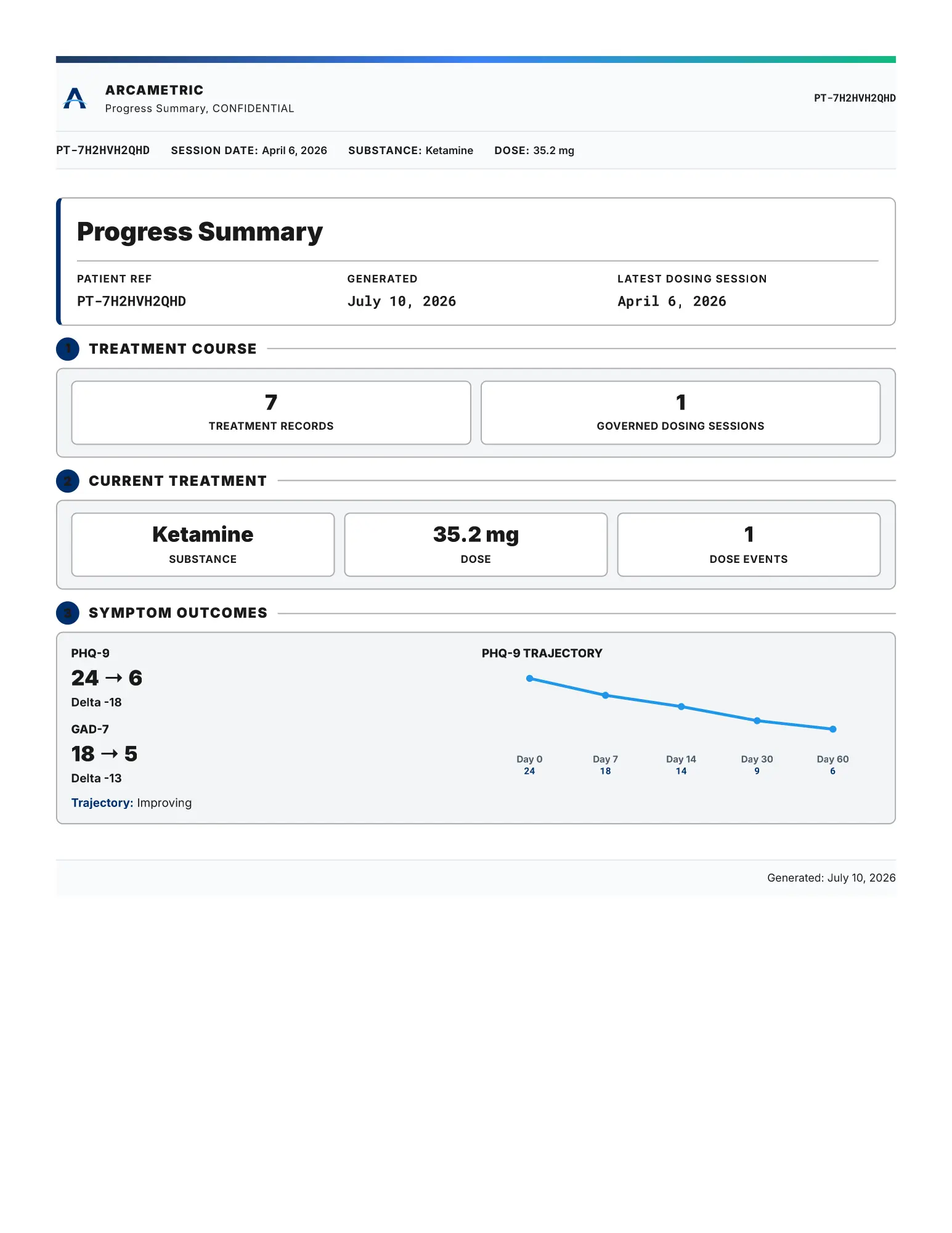
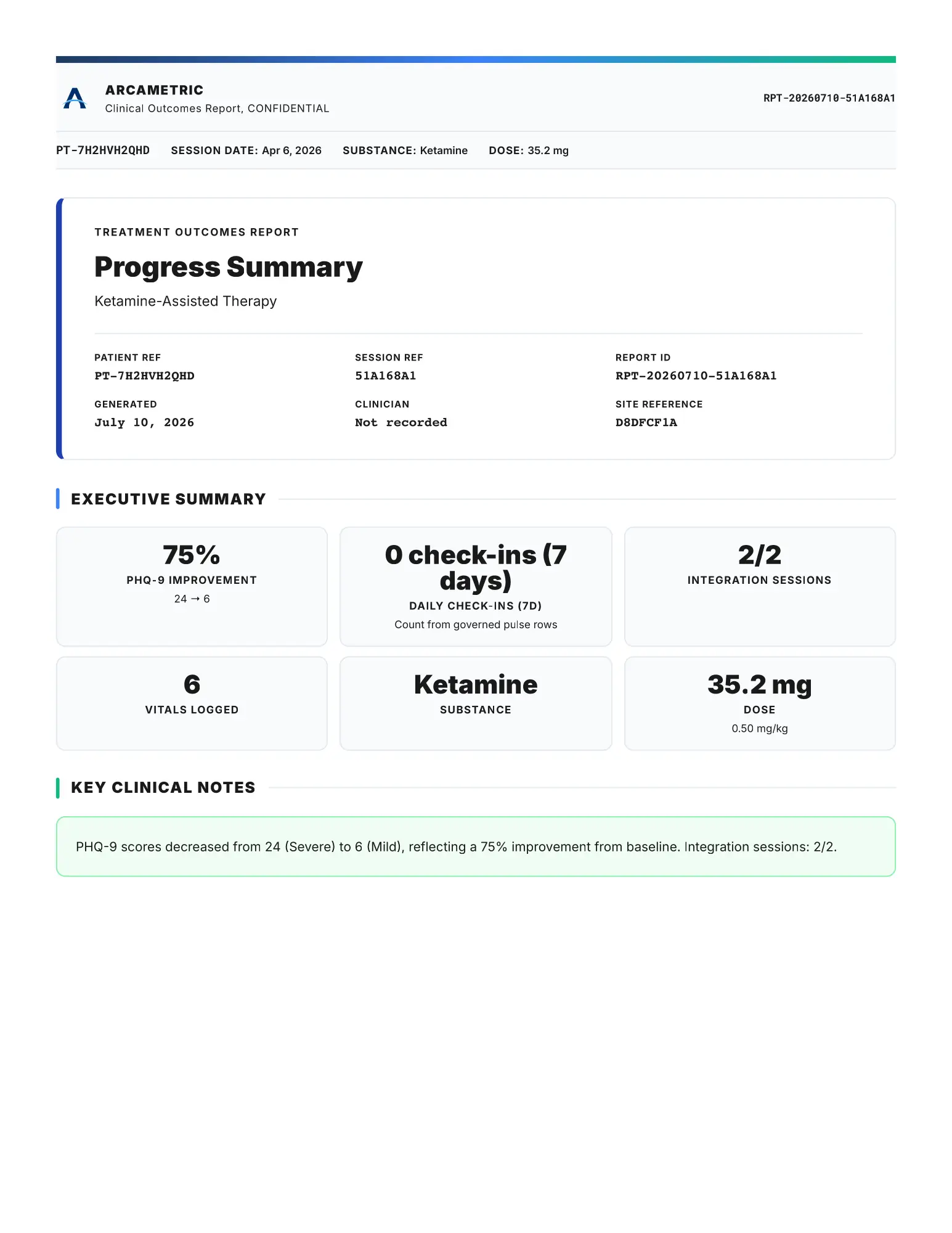
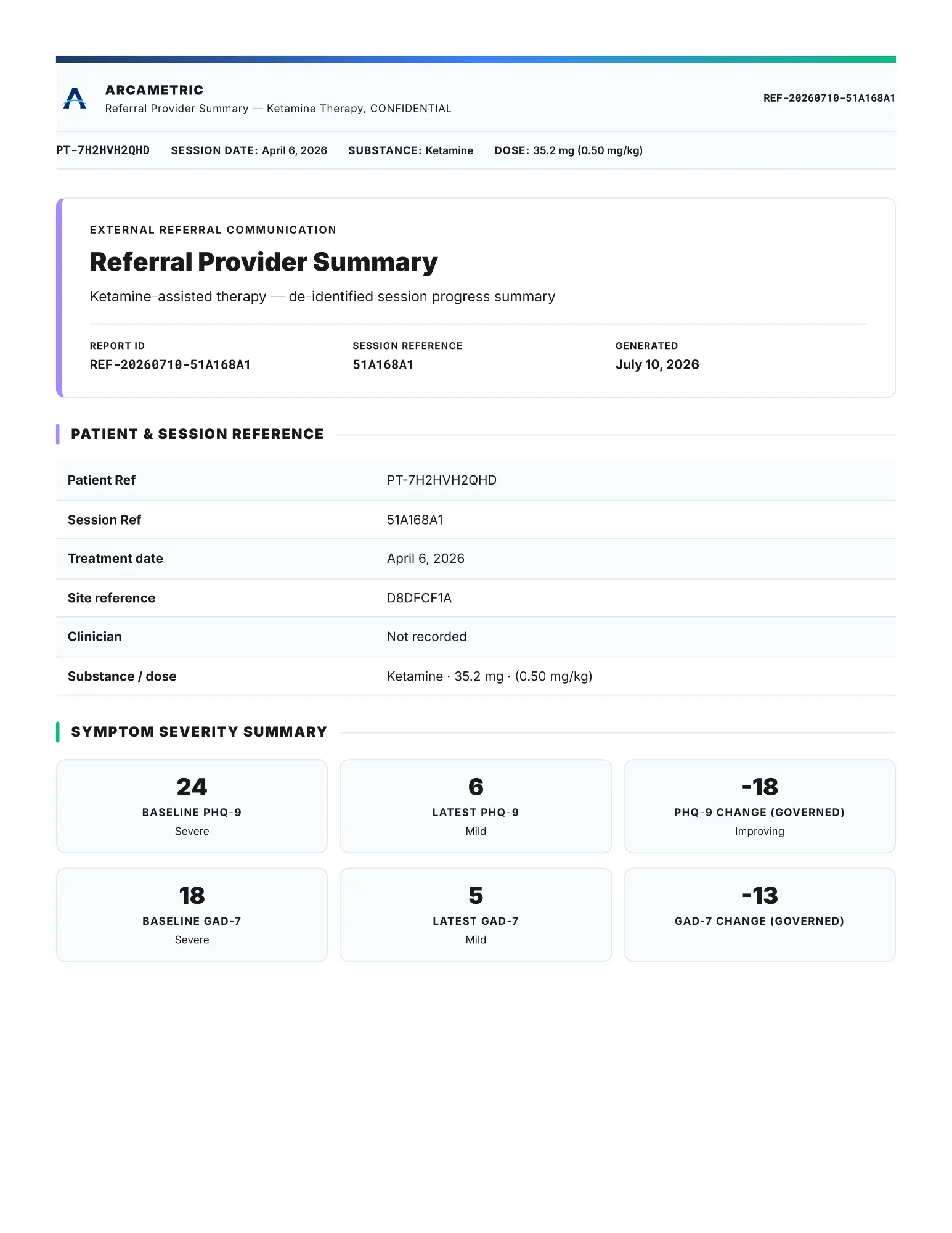
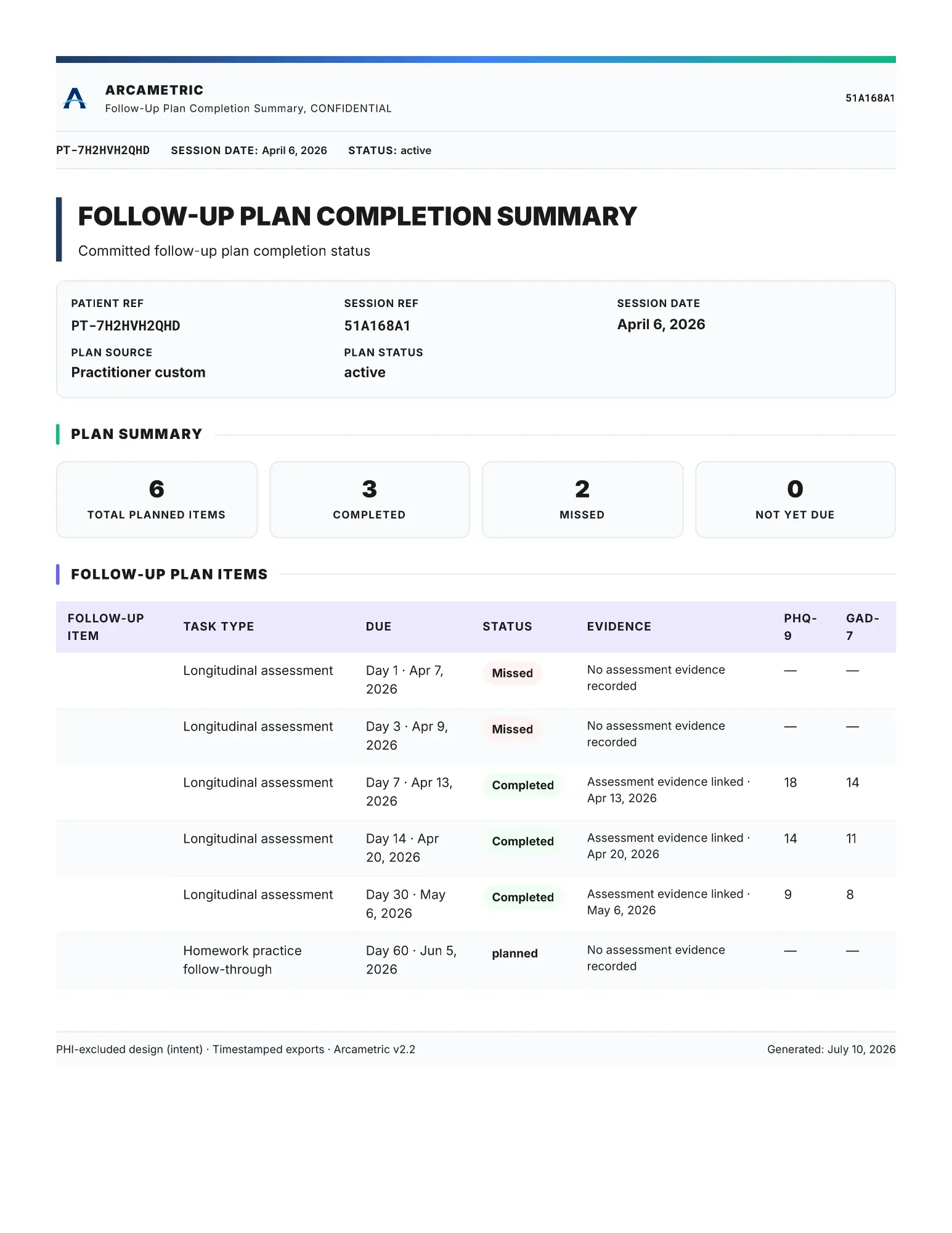
Keep patient identity in your clinic.
Arcametric works with a De-Identified Patient Reference and structured clinical data, while the patient's name stays in the clinic's own systems.
Patient Identity
Name, date of birth, contact details
Identity remains hereEHR
Your existing identity-bearing clinical system
Local Crosswalk
The clinic maps identity to a De-Identified Patient Reference and keeps that link in its own systems.
De-Identified Patient Reference
No patient name required
Structured Clinical Record
Timing, interventions, observations, follow-up
Reports and Analytics
Governed clinical outputs from eligible structured data
Inspect the methods, coding, privacy, and research behind the record.
Go deeper into the public resources that explain how Arcametric structures clinical information, handles identity, maps terminology, and defines the limits of what the record can support.
- Research Library Published third-party evidence, sources and limits labeled
- Standards Initiative The working coding proposal and how to review it
- Coding Landscape Where existing code systems fit, and where the gaps are
- Structural Privacy How patient identity stays separate from the record
- Sample Reports Real governed outputs from a structured record
Start with your next treatment record.
Start using the workflow now, or inspect the reports, privacy architecture, and methodology first.