
Keep preparation, treatment, and integration connected in one workflow.
Capture structured information as care progresses, continue follow-up from Integration, and turn the same clinical history into reports and exports beside the EHR you already use.
The record starts before treatment, grows through the treatment session, and continues into the integration and follow-up work that comes after it.
Establish the baseline, clinical context, and planning that need to be available when treatment begins.
- Informed consent
- Risk and safety
- Mental health screening
- Set and setting
Build a structured chronology of the session as dosing, events, vitals, observations, and other recorded information unfold.
- Dose administrations
- Vitals
- Clinical reports
- Adverse events
- Experiential observations
Keep integration sessions, assessments, follow-up planning, and later observations connected to the treatment history.
- Integration sessions
- Follow-up planning
- Ongoing assessments
- Long-term follow-up
Set the baseline before treatment begins.
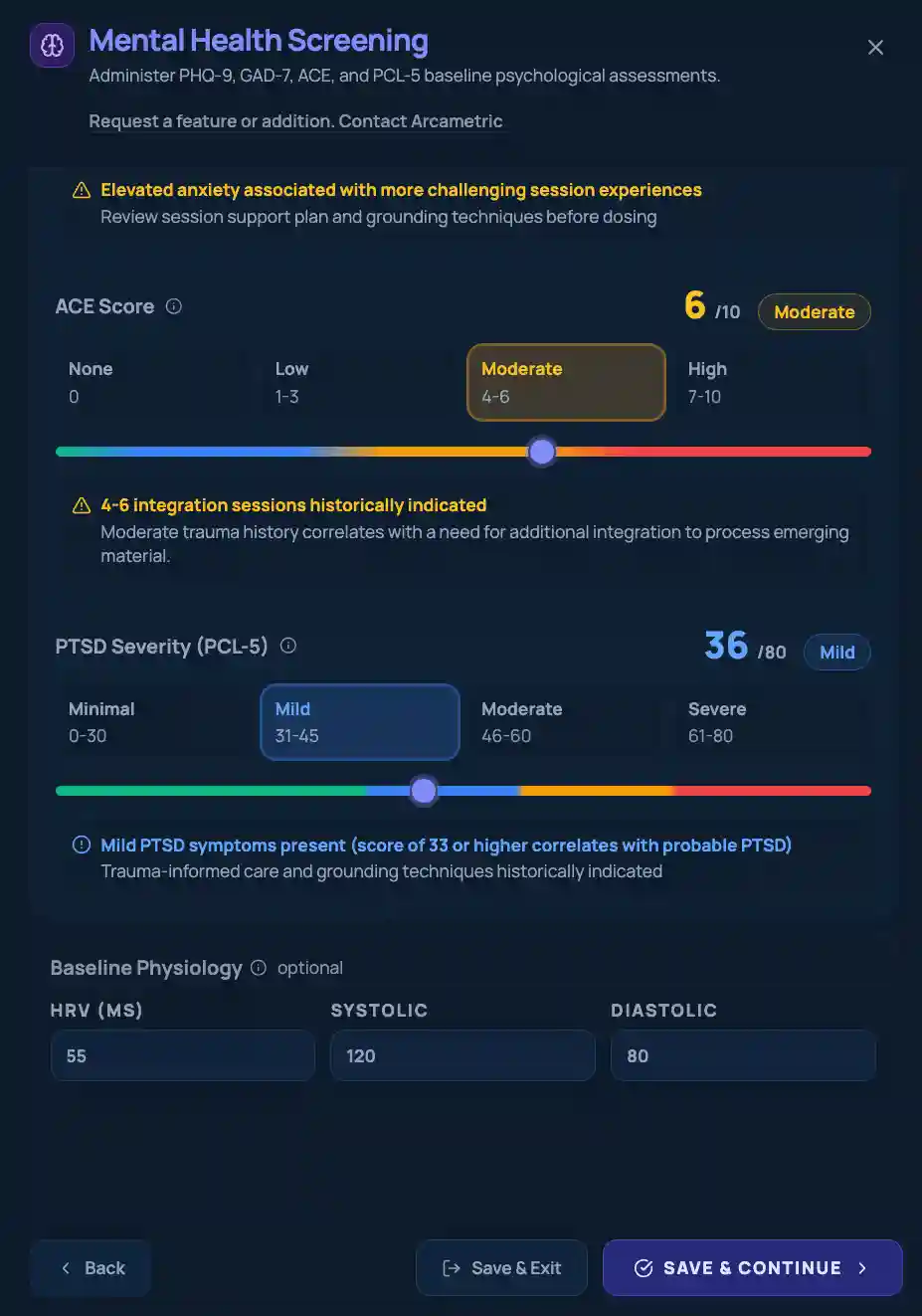
Capture screening, consent, baseline measures, medications, set and setting, and other preparation context before the treatment session begins. Those starting points stay attached to the record that follows.
Document the treatment session as it unfolds.
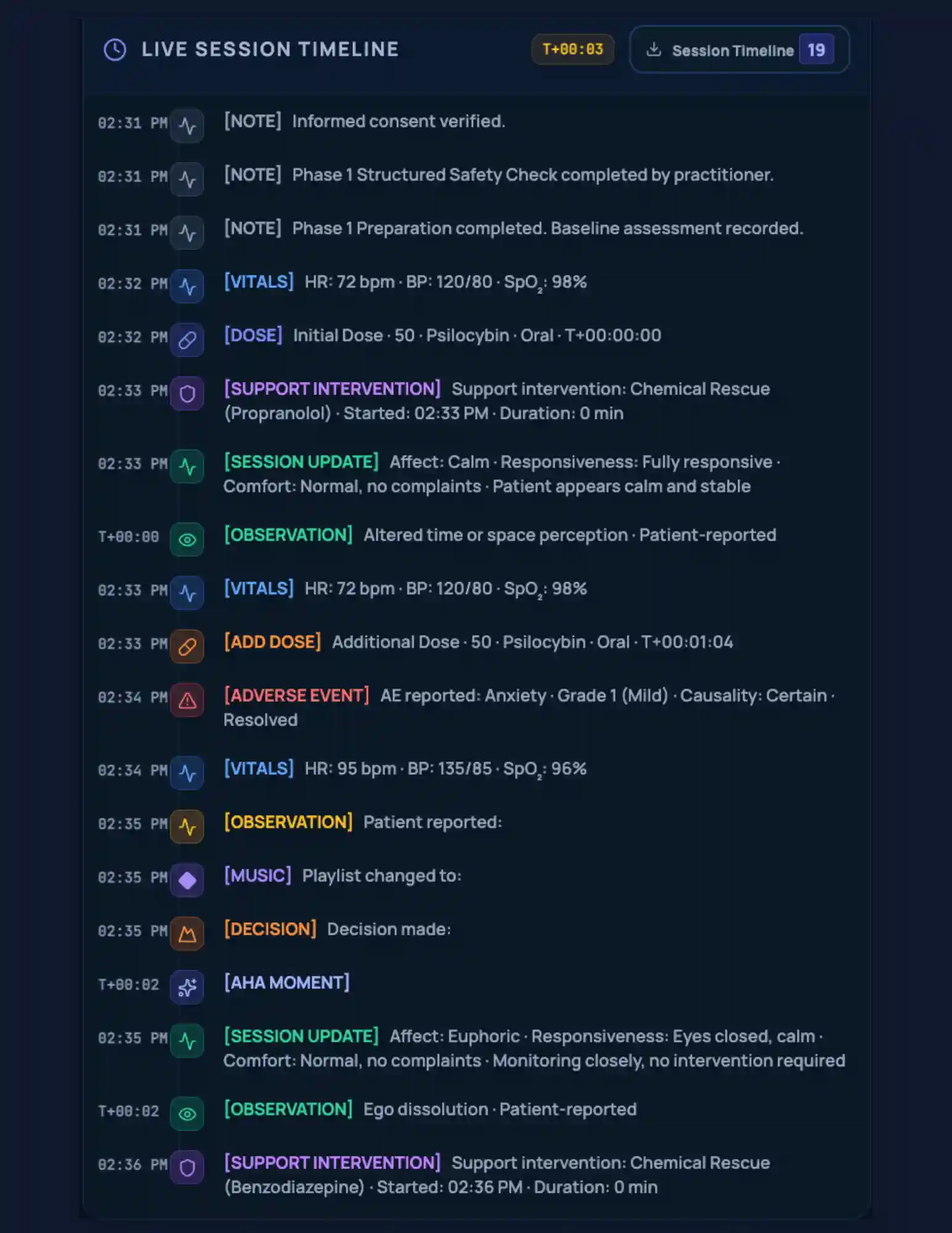
Record dose administrations, vitals, clinical events, observations, interventions, and safety events against the same session timeline. The chronology keeps what happened and when it happened together without forcing the session into a generic visit note.
Carry the record forward through integration and follow-up.
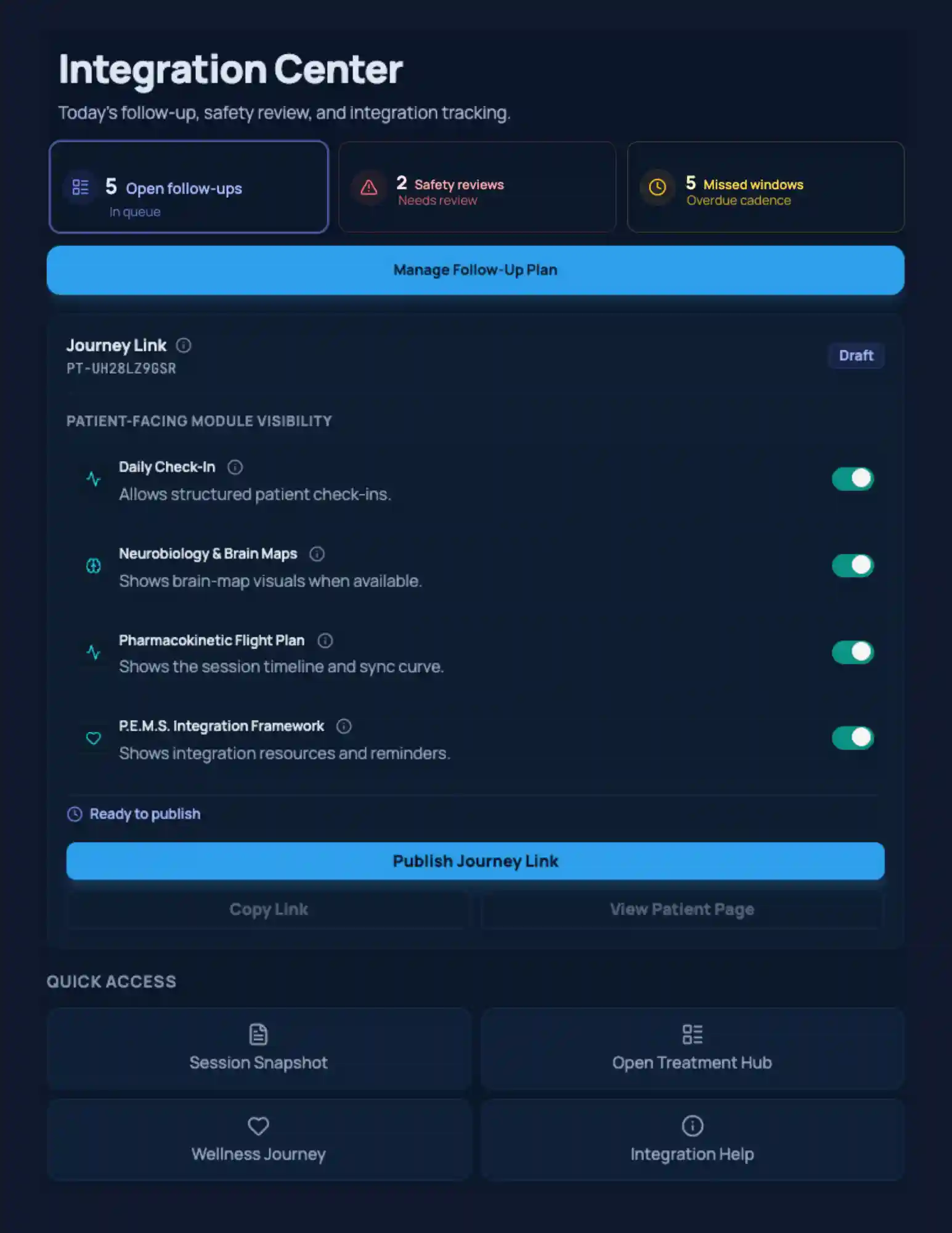
Manage follow-up plans, integration sessions, scheduled assessments, assigned activities, safety review, and upcoming or missed items after treatment. Later observations and assessments stay tied to the treatment history instead of becoming a separate story.
Review the changes recorded over time without separating them from the treatment context that came before them.
Turn the same structured history into reports and exports.
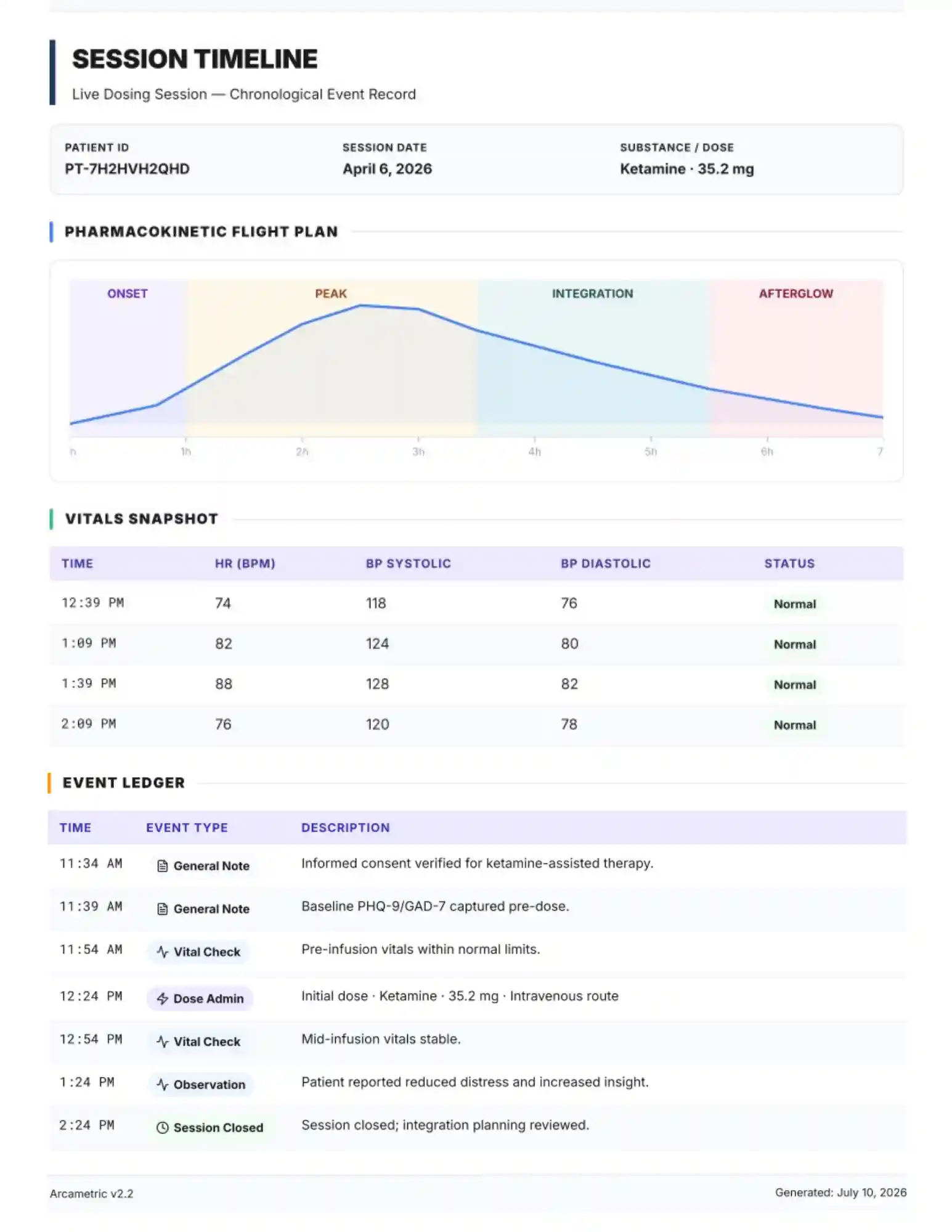
Use the clinical history to produce supported outputs such as the Session Timeline, Progress Summary, Clinical Outcomes, Follow-Up Completion, and Referral Provider Summary, along with structured data exports where appropriate. Each output draws from the governed record rather than asking you to reconstruct the history from a separate narrative.
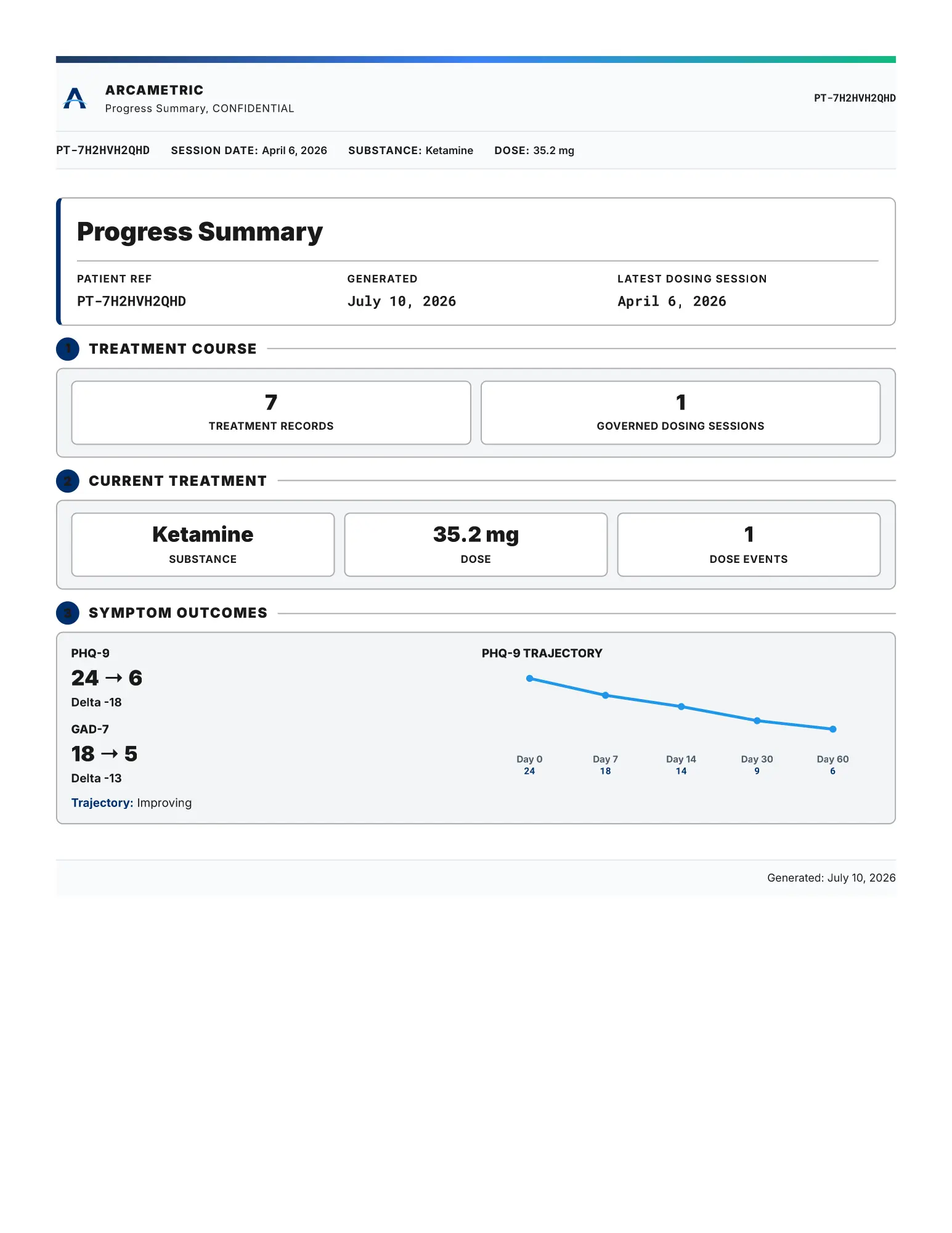
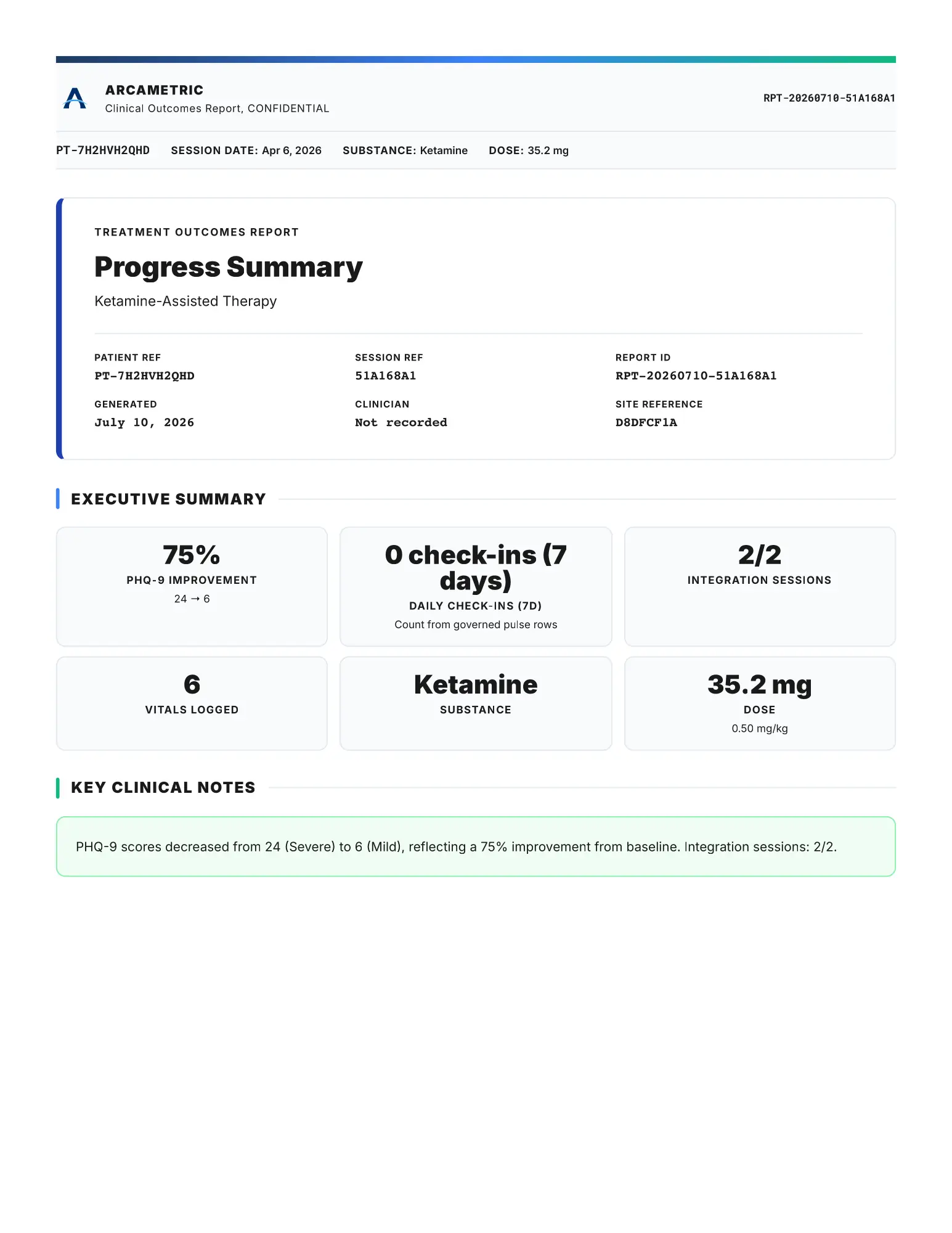
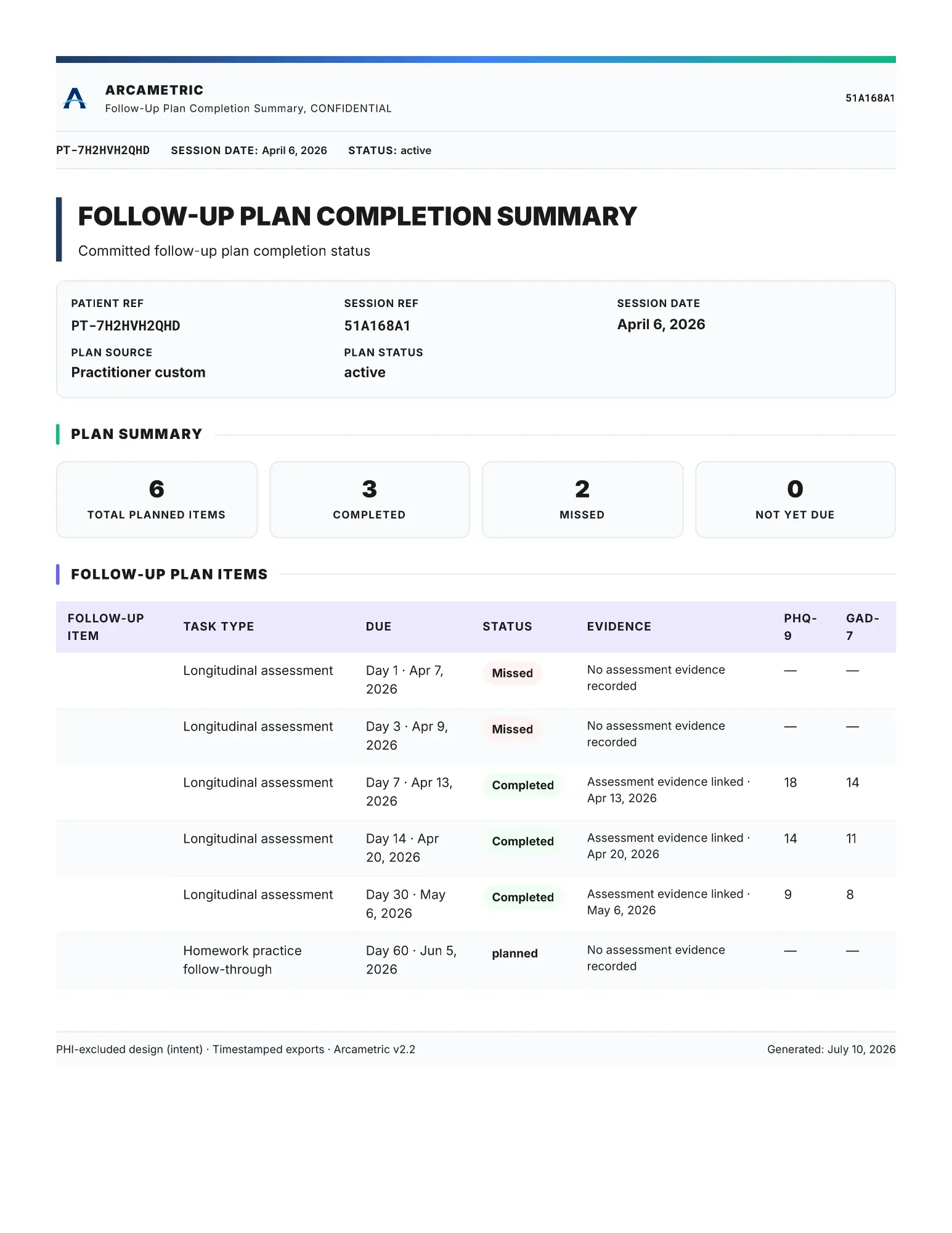
Keep your EHR, and document the treatment workflow beside it.
Your EHR remains the clinic's existing chart, scheduling, billing, and patient-identity system. Arcametric structures the specialized treatment and follow-up record beside it. When you need information back in the chart, download the supported report or structured export and save it through your clinic's normal workflow.
- Intake and consent
- Safety screening
- Baseline measures
- Live session timeline
- Vitals
- Observations
- Follow-up
- Assessments
- Assigned activities
- Progress over time
- Patient identity (name, DOB, demographics)
- Scheduling and encounters
- Clinical notes and documents
- Billing and claims
- Ongoing care across your practice
Downloads and saves are one-way workflow steps. This diagram does not imply automatic EHR synchronization.
Keep patient identity in your clinic.
Arcametric uses a De-Identified Patient Reference and structured clinical data in the shared workflow, while the clinic keeps the identity-to-reference relationship in its own systems.
The structured workflow and governed exports do not depend on patient names, dates of birth, or contact information.
See what the same clinical history can produce.
Start with the workflow when you're ready, or inspect the reports and privacy architecture before you decide.